Every Sun ray can be converted into energy. We know the Sun itself is a source of endless energy, and solar zones Australia are using this solar energy for their needs. Businesses all over Australia are already using solar energy for their business operations, many working closely with solar companies Melbourne and other regional experts to install efficient rooftop solar systems. They are installing rooftop solar on their facilities and using renewable energy to reduce their operational costs, electricity bills and save millions each year. Through the lucrative use of Small-scale Technology Certificates or STCs, Australia is installing more and more sun-drenched rooftops. Therefore, they are able to reduce upfront costs for buying the solar panels for their needs and also lower their utility bills. Rebates, such as STCs, are tradable certificates that provide these commercial ventures with immediate discounts on solar equipment. In the STC rebate, for every megawatt-hour your installation generates, you get a little digital certificate. However, these STC rebates vary by location.
Let EcoGreen Australia show you how these solar rebates vary for each solar zones Australia!
What Are These Tradable STCs?
Tradable STCs can bring lucrative solar rebates or incentives for your commercial venture. The tradable means these certificates can be sold or traded in the market, hence, instantly offsetting solar installation costs for your business. The Australian government grants your business tradable ‘Small-scale Technology Certificates’ for every megawatt-hour your commercial solar system will generate until 2030, which is the year when rebates will end. These rebates can reduce the upfront costs on your solar energy systems , and hence, make solar energy more affordable for your business. The STCs are an instant invoice discount and negate the chain process of the usual rebate claim. Therefore, STCs make solar panel rebates or solar battery rebates easier. But as we know that sunlight isn’t evenly distributed across Australia, and this is why we need to segregate the solar zones Australia as per the sunlight they receive.
Know These Solar Zones!
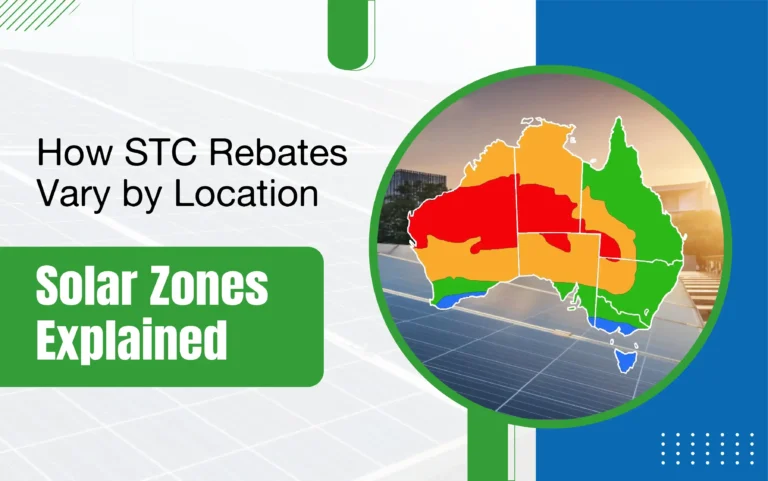
As we discussed before how Australia doesn’t receive sunlight uniformly. This means Australia has different zones for different amounts of sunlight they receive. Some solar zones Australia bask in endless glowing hours, while others receive steady, reliable warmth during the Sun’s peak hours. These solar zones decide how much you earn in STC rebates and how much energy your solar panels can save. To know the exact amount of this ratio, and to know the potential of your solar investment, you need to know the location where your business is located. Australia is divided into four solar zones, each with its own zone multiplier that reflects local sun exposure. Let EcoGreen Australia show you what are these solar zones!
- Zone 1
This is one of those solar zones Australia that receives the most Sunlight. The zone includes the Northern and central regions, such as Darwin and much of outback Queensland. With a high sunlight rating (factor 1.622), the solar energy systems in this zone earn the most STCs and the biggest rebates in the country.
- Zone 2
This zone receives moderate Sunlight, less than Zone 1. Here, the major cities like Brisbane and Perth get strong sun exposure. The zone factor, here, is around 1.536. Rebates in this zone are lucrative; however, still remain a touch lower than Zone 1.
- Zone 3
Zone 3 receives the average Sunlight, lower than Zone 1 and Zone 2. The Zone 3 includes cities like Melbourne, Sydney, Adelaide, and the ACT factor, here, is 1.382. Here, you can still get solid STC support, just slightly below the northern zones, due to less intense sunlight.
- Zone 4
This is one of the solar zones Australia that receives the least Sunlight. It includes Southern regions, such as Tasmania and southern Victoria receive less solar energy. Here, the factor of 1.185 ensures the smallest rebates, but still a beneficial rebate per kW installed for your commercial facility.
| Location | STC Solar Zones | Expected Annual Generation (MWh) | STCs Created | Rebate At $38 per STC |
|---|---|---|---|---|
| North West & Central Australia | 1 | 10.7 | 107 | $4,066 |
| Brisbane, Perth | 2 | 10.1 | 101 | $3,838 |
| Sydney, Melbourne, Adelaide | 3 | 9.1 | 91 | $3,458 |
| Melbourne & Tasmania | 4 | 7.8 | 78 | $2,964 |
How This Upfront Discount Works For Your Business?
Usually, if you install solar energy systems for your commercial facility, the costs can be on the higher side. On the other hand, when you get your systems and claim through the STC rebate, it can reduce the upfront costs up to half and hence, solar energy systems become affordable for any commercial venture in solar zones Australia. Since these rebates are instant, they negate the extra hassle for everyone. So, if you are putting down your deposit for a 100 kW solar system, you get a total discount of up to $40,000 from the final invoice because of these STC rebates. However, as we know, these solar rebates vary for each solar zones Australia.
Maximize Your Solar Zone Benefit With EcoGreen Australia!
We hope you understand the solar zones and how these zones differ from each other. So, now remember, your postcode can generate you much discounts. EcoGreen Australia helps you in the rebate claim process that maximizes your solar zone benefit. Our specialists assess everything in detail, using solar zones Australia data and craft the best solar energy installations to optimize your STC return. We consider your roof’s orientation, shading, and even microclimate effects. But every business venture needs to act soon because by the year 2030, rebates will no longer be active and they are reducing year by year. Therefore, the year 2025 is the best time to get the maximum rebates. Let’s maximize the solar zone rebate and lock in rebates at their peak to get the best ROI for your solar installations .

- How to Pick the Right Battery Type for Your Solar Lifestyle - March 21, 2026
- Victoria’s Cheaper Home Battery Rebate Program: Everything You Need to Know - March 11, 2026
- How to Calculate the Ideal Solar System Size for Your Home in Australia - March 7, 2026