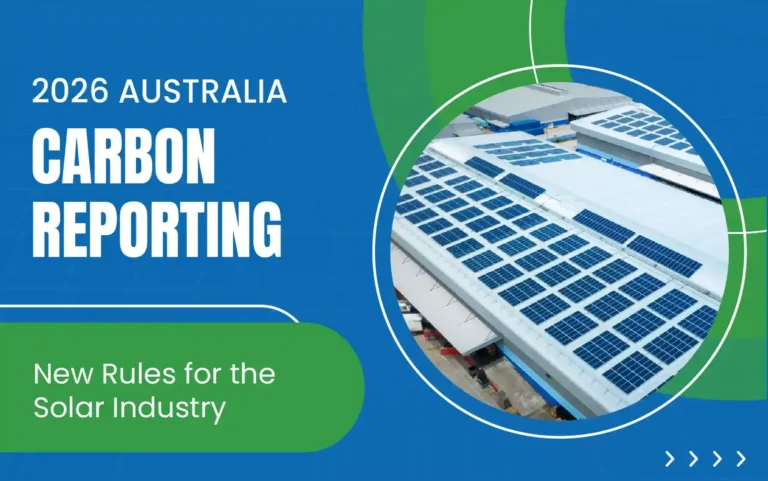
As a business, you could install the cleanest solar system in the country, power thousands of systems and cut tonnes of carbon, and still fail compliance in 2026 because you didn’t upload the right photo or report the right emissions. Yes, this is how complicated the new era of Australia’s solar industry is because today carbon data, financial disclosures, and geotagged battery selfies are becoming just as important as panels and inverters.
From mandatory climate reporting to stringent battery installation proof, 2026 hasn’t just come with another regulatory update; it has arrived with a full-blown mindset shift through the sustainability report in Australia . Wondering what the new rules for the solar industry dictate? Here’s a blog to help you get started.
The Big Shake-Up: Carbon Reporting Goes Mainstream
Until recently, carbon reporting was something that only the “big corporations were worried about.” From big corporations, here we mean oil giants, airlines or mining companies, not your average solar supplier or installer.
However, from 2026, climate reporting has become imperative. Australia is rolling out its mandatory Climate-Related Financial Disclosures (CRFD) aligned with new sustainability standards from the AASB (based on global ISSB guidelines). What does this mean for your business? It means that large companies now must disclose:
- Their climate risks
- Climate opportunities
- How climate affects their strategy, and
- Their Emissions (Most important)
We are talking about:
- Scope 1: Direct emissions
- Scope 2: Electricity emissions
- Scope 3: Supply chain emissions (this is where solar businesses feel it the most)
And here’s the twist- even if you aren’t a huge company, your customers might be, which means they will start asking you for emissions data.
Who Exactly Has to Report?
If your company earns or holds more than $200 million (or is already reporting under NGER), you are officially in the spotlight. Reporting starts for financial years starting on or after 1st January 2025, with the first disclosures due in 2026. Here’s a simplified table to make things crystal clear for you:
Scope 3: The Solar Industry’s New Favourite Headache
Scope 1 and 2 are manageable because they include quantifiable things like fuel, electricity and operations. However, Scope 3? It involves everything else, like:
- Your suppliers.
- Your logistics partners.
- Your manufacturers.
- Your installers.
- Your packaging.
Thus, companies that prepare early will look professional, reliable and future-ready, whereas the rest that say “we don’t have the data yet” won’t age well.
The Camera Factor
While the corporate side wrestles spreadsheets, installers face something far more hands-on, i.e. visual data. From 1st March 2026, battery installations must include:
- Clear photos
- Geotagged
- Timestamped
- Showing correct signage and labelling
- Submitted to the Clean Energy Regulations
Thus, if you don’t have the visual proof, staying compliant can be a problem, and when you don’t achieve compliance, forget about incentives. This isn’t about distrust; it’s rather about standardisation and safety.
But it does mean that your phone has just become a part of your toolkit, right next to your drill.
Read More: Solar and Sustainability: What It Really Means for Your Home and the Planet
NGER Changes: Because Why Stop at One Rule?
Australia is also updating its National Greenhouse and Energy Reporting (Measurement) Determination. These amendments apply to reports due by 31 October 2026 (for the 2025–26 year), and they are supposed to introduce:
- New measurement methods
- Updated calculation rules
- More consistency across sectors
In a nutshell, your emissions data must be better, cleaner, and audit ready.
Why is This Actually Important?
At first glance, this feels like bureaucracy wearing a sustainability hat. But there’s a bigger story. These rules are important to:
- Increase investor confidence
- Expose weak climate strategies
- Reward companies that genuinely reduce emissions
- Push supply chains to clean up together.
Thus, solar businesses are no longer just “selling green,” they are being measured by how green they are. And honestly? That’s kind of a formidable step to save energy for future generations!
What Should Businesses Do Right Now?
Without panicking, here are some practical steps for businesses right now:
- Learn your Scope 3 reality
- Train your installers
- Document everything
- Assign ownership
- Monitor standards
Do this, and the future-you will be grateful!
Conclusion
2026 has changed the solar industry’s job description because it’s no longer just about helping Australia go green; it’s also about proving that you are making an impact, documenting it, reporting the changes, and auditing. There’s no denying that it’s much more work (we are not sugar-coating things), but it also levels the playing field.Companies cutting corners will stand out while winning customers’ trust, and in a world where climate credibility matters more than ever, that trust is priceless. Looking for the right solar partners to help you stay compliant with the regulations of the sustainability report in Australia and power your business forward? Reach out to our team at EcoGreen Australia today!

- How to Pick the Right Battery Type for Your Solar Lifestyle - March 21, 2026
- Victoria’s Cheaper Home Battery Rebate Program: Everything You Need to Know - March 11, 2026
- How to Calculate the Ideal Solar System Size for Your Home in Australia - March 7, 2026