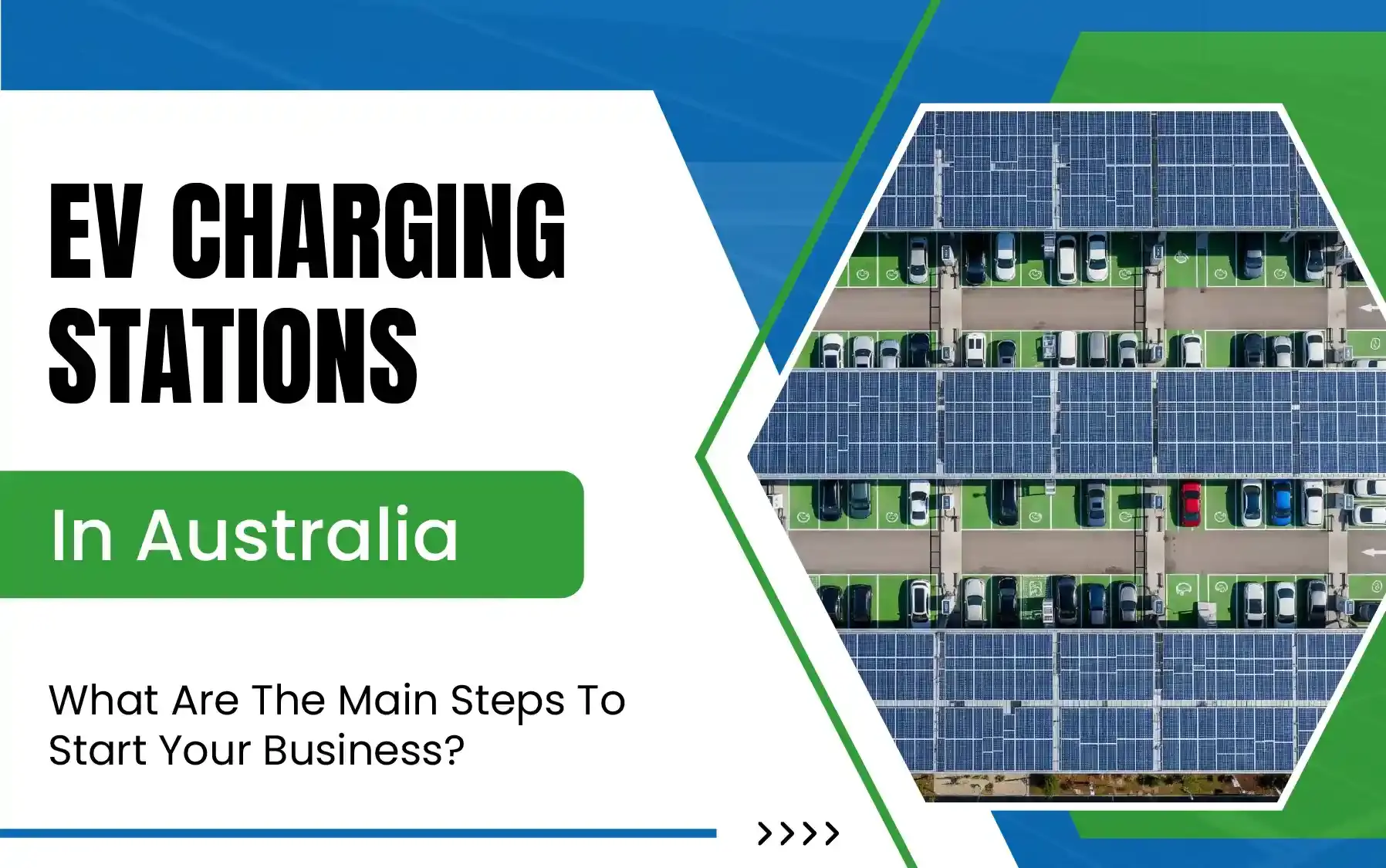
Electric Vehicles (EVs) are among the safest and most efficient transport solutions in Australia. As the nation pushes toward emissions reduction targets and faces rising fuel costs, consumer adoption of electric mobility is accelerating at an unprecedented rate. To support this shift, the demand for reliable and accessible charging infrastructure has become critical - especially when combined with Battery Energy Storage Systems (BESS) that improve grid stability and energy efficiency.
Your one-stop blog on how to establish an EV charging station franchise in Australia covers everything from the technical requirements and regulatory compliance to scalable operations for profitability that is sustainable according to the experts at Ecogreen Australia solar companies.
Understanding the EV Charging Market in Australia
Australia's EV charging ecosystem is at a stage of transition from early deployment to the expansion of structured infrastructure. Supported by government incentives, state-based EV roadmaps, and private sector investment, charger installations on highways, commercial hubs, and residential zones are gaining momentum.
Key drivers include
- Urban density in Sydney, Melbourne, and Brisbane requires high-utilisation sites.
- Highway corridors requiring ultra-fast chargers that would be needed for long-distance drives.
- The passive income from models of EV charging station franchises in Australia will benefit from commercial hubs like shopping centres that already leverages government energy rebate .
The franchise model aims to lower barriers to entry for new market participants by providing proven and advanced technology, proper support and established brand recognition within the Australian EV sector.
Read Also This: Australia Leads in Solar: Rooftop Power Transforms Businesses
Why Invest in Australia’s EV Charging Infrastructure Through a Franchise?
Franchises lessen barriers to entry by using proven models, networks of suppliers, and branding. They offer-
- Technical Designs: Harmonisation of hardware components like CCS2 connectors and OCPP 2.01 protocols that ensure interoperability.
- Multiple Revenue Models: Sources of revenue include pay-per-use, subscriptions, and partnerships with fleets.
- Scalability: Modular deployment from single stations to networks.
- Risk mitigation: To access certified installers and 24/7 monitoring software.
Compared to independents, franchises realise quicker ROI through bulk purchasing and marketing support.
The Strategic Advantages of Franchising
The franchise model for your EV charging business makes the transition from setup to operations seamless. This is achieved by standardizing the specifications of products required and central operational support, bringing in several important benefits, including:
- Lower Entry Barriers - The franchise model reduces upfront complexity by offering access to pre-approved charging infrastructure, standardized hardware and proven deployment process.
- Technology Standardization - Franchise networks are typically aligned with vast adopted charging standards and interoperable software platforms, ensuring compatibility across vehicle models without requiring independent technical validation.
- Integrated software ecosystem - Centralized backend systems manage payment process, remote monitoring, and removing the need for operators to independently source or integrate multiple software protocols.
- Market Leadership Edge - Align with the best EV adoption trend, leveraging the franchisor’s network for prime locations and customer traffic. EV adoption trends supported by national clean energy initiatives like the Capacity Investment Scheme Tender 8.
- Brand and Network Advantage - Most importantly, it is very beneficial operating under an established charging network as it enhances network visibility, customer trust and utilizing rates within the Australian EV market.
6 Key Steps to Launch Your EV Charging Station Franchise Australia Business
The launch requires a structured process that combines technical, financial, and operational phases:
- 1. Proper Market Research and Selection of a Franchise
It will first and foremost analyse regional EV-adopting trends and select an appropriate franchise partner.
Key activities include mainly-
- Primarily, the analysis of EV Penetration and Demand Forecasts with the use of AEMO datasets and state transport reports.
- Detection of high-growth corridors, clusters of fleets, and charging demands driven by retail.
- Franchise operators are compared for the scale of the network, charger specifications, back-end software, and roaming agreements.
- Review of franchise commercial terms, including royalty structures and support models.
2. Technical Feasibility and Grid Connection Assessment
Successful deployment starts with the grid. You must liaise with DNSPs (Distribution Network Service Providers) such as Ausgrid, Endeavour Energy, or Powercor. Professional load flow studies are required to ensure the local network can support fast or ultra-fast charging without significant power drops.
3. Site Acquisition and Development Approvals
Secure high-visibility leases and obtain Development Application (DA) consent. In NSW, this involves compliance with the EP&A Act. Additionally, ensure the site follows the National Construction Code (NCC) guidelines for accessibility and safety.
4. Hardware Procurement and Installation
Deploy charging units that meet AS/NZS 3000 electrical standards. High-power chargers should feature robust thermal management systems and integrate with SCADA systems for real-time remote diagnostics.
5. Software Integration and Network Testing
Modern EV charging infrastructure operates as a software-defined energy asset.
Some of the key components of this would include:
- Open Charge Point Protocol (OCPP) backend servers
- Load balancing and dynamic pricing algorithms
- API-integrated payment gateways, like Stripe
Therefore, before commissioning, interoperability testing is conducted under the IEC standard to make sure of charger-network compatibility. Franchise operators benefit from pre-integrated solutions within an EV charging station franchise Australian ecosystem.
6. Go-Live, Monitoring, and Performance Optimisation
After commissioning, operational performance needs to be continually monitored.
- Uptime of chargers: over 99%
- Utilisation rate of more than 60% for all mature sites
- Energy all over and peak demand control
- Fault response and maintenance turnaround times.
Most franchise networks have centralized Network Operations Centres (NOCs) for 24/7 monitoring, diagnostics, and reporting.
Read Also: Top 10 Advantages and Disadvantages of Solar Energy
Financial and Commercial Considerations
- Site utilisation and pricing strategy drive the generation of profit.
- Pay-per-session and kWh-grounded charging rates.
- Subscription-based access for frequent EV users
- Network roaming profit
- Advertising and data monetisation
That is the reason an EV charging station franchise Australia could allow predictable cash inflow by using established client networks, as well as demand forecasting.
Conclusion
Lastly, the entry into the EV-charging market in Australia represents an exciting yet technical opportunity. The undertaking needs meticulous implementation when it comes to market analysis, network design, and optimisation.
Following a structured deployment approach and collaborations in the form of an EV charging station franchise Australia, businesses can mitigate technological risks, ensure swift time-to-market, and build scalable charging platforms in line with the clean mobility vision for Australia.
At EcoGreen Australia, we specialise in delivering future-ready clean energy solutions for Australian businesses. From commercial solar systems and battery storage to energy rebate advisory and sustainable infrastructure planning, we help businesses reduce energy costs, improve ROI, and transition toward a smarter, greener future.