Australia is in a formidable position with endless blue skies, abundant sunshine, and a growing shift toward cleaner living, but it also carries a quiet worry. With the rising power bills, climate uncertainty there’s a new question looming over Australia, which asks, “Are we actually doing enough for the environment, or just talking about it?” From bushfire seasons that feel longer every year to energy costs that refuse to slow down, the pressure to make smarter energy choices has never felt more real.
That’s where solar panels step into the spotlight. In case you are wondering about the solar panels' impact on the environment, let us tell you, rooftops across Sydney, Melbourne, Brisbane, and beyond are shimmering with promise. Wondering about the pros and cons of solar panels for the environment? Here you go!
Why Solar Panels are a Big Environmental Win for Australia?
For those thinking about how are solar panels made, let us tell you that solar panels are constructed using solar cells integrated together in a matrix-like structure. The Photovoltaic (PV) cells in these panels convert sunlight directly into electricity, which can then power buildings or be converted to AC. Here’s why solar panels are a big upside for Australia:
- Clean Energy that Matches Australia’s Natural Strength
Australia receives more sunshine per square meter than almost any other continent. Solar panels don’t fight nature; they work with it, and every kilowatt of solar power generated replaces electricity that would otherwise come from coal or gas, which significantly reduces emissions over time.
Australia’s more than 3 million rooftop solar systems cut national emissions by over 17.7 million tonnes in 2021, and this impact has further grown in the following years. (Source) Yes, one installation may feel like a drop in the ocean, but millions of drops- that’s a wave!
- Energy Independence
One of the most compelling benefits of solar energy is the freedom it brings. Solar panels allow businesses across Australia to generate their own electricity, which reduces dependence on the traditional grid.
In cities like Melbourne, where energy prices can fluctuate, this independence creates stability and predictability. When paired with battery storage, solar systems can even provide power during outages, while being reliable and sustainable.
- Solar Panels Reduce Pressure on Natural Resources
Conventional power generation tends to rely on constant fuel extraction like coal mining, gas drilling, and water-intensive processes. However, once installed, solar panels can quietly generate energy without ongoing resource consumption. That invariably and implicitly means:
- No fuel deliveries
- No water usage during electricity generation
- No emissions drifting into the atmosphere
We would say it’s a rare case where technology simplifies things rather than complicating them.
- Significant Long-Term Cost Savings
Solar energy isn’t just good for the planet; it’s incredible for the bottom line as well. Once installed, solar panels produce electricity at little to no ongoing cost, which helps establishments significantly reduce their power bills.
Government rebates and incentives available across the towns can further lower upfront investment, which makes the transition even more accessible. Over time, the savings accumulate, often offsetting installation costs within a few years while continuing to deliver financial benefits for decades.
- Local Power Means Local Environmental Benefits
Solar panels produce energy exactly where it’s needed, i.e. on rooftops, warehouses, schools, and community buildings. This reduces the need for long-distance electricity transmission, which typically involves land clearing and infrastructure expansion. For Australia’s vast landscapes, decentralised energy means fewer disturbances to bushland and wildlife corridors, which is an environmental win that often goes unnoticed.
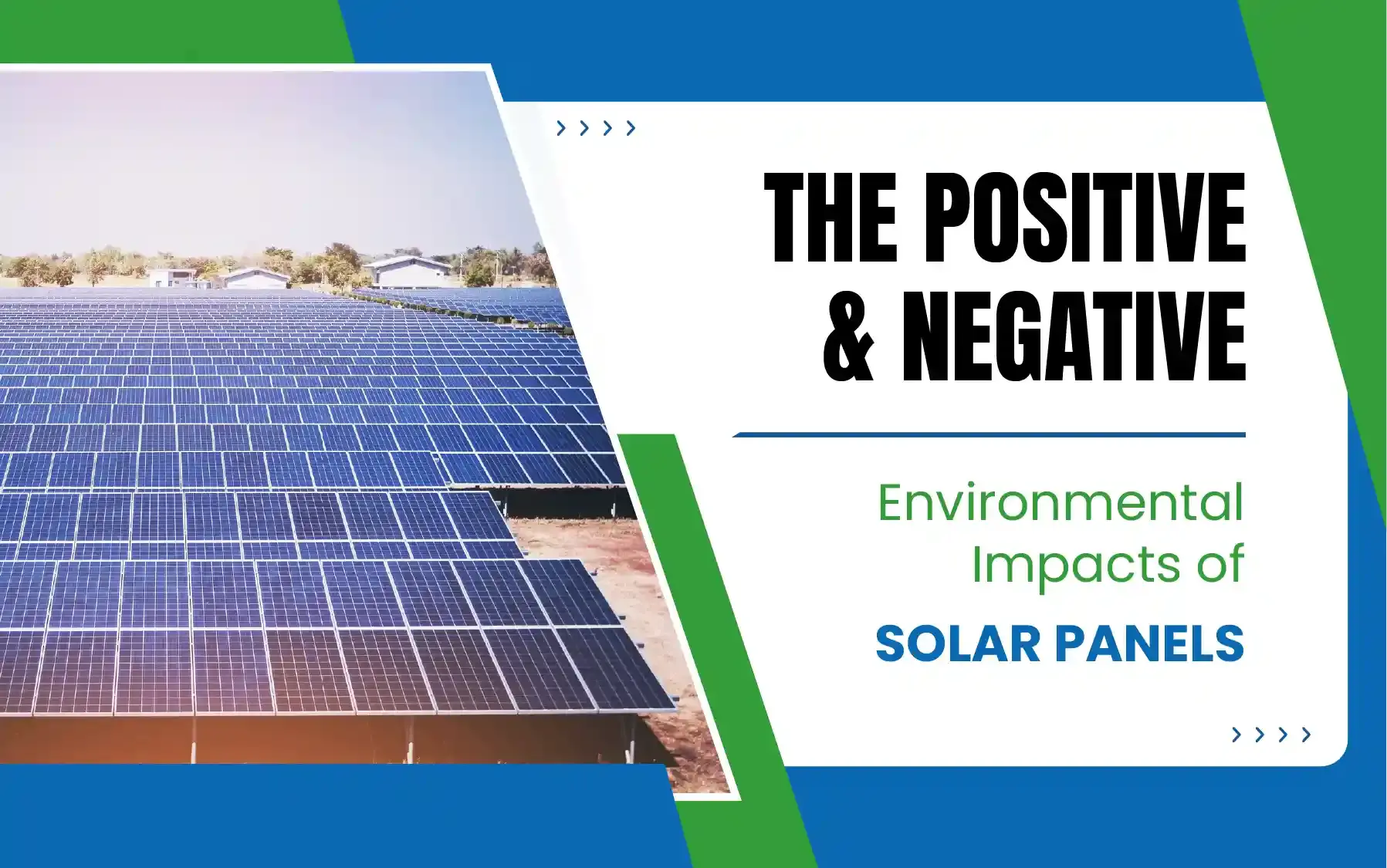
The Negative Side: What’s Worth Understanding, but Not Worrying About
Every technology has a lifecycle, and solar panels are no exception. Instead of calling these the negatives to solar energy, it’s more accurate and far more useful to see them as neutral considerations that are already improving.
1. Manufacturing Has an Environmental Footprint
Solar panels are made using materials like silicon, aluminium, and glass. The manufacturing process does require energy. However, here’s the balancing act: most solar panels offset the energy used to produce them within 1-3 years, while continuing to generate clean electricity for 25 years or more.
In Australia, where solar efficiency is high due to sunlight levels, the energy payback period is often even faster.
2. End-of-Life Panels Are Becoming a Resource
Solar panels don’t last forever, but they don’t vanish either. Recycling programs are expanding across Australia, and the industry is shifting toward a circular economy, where old panels become raw materials for new ones. This isn’t a future dream; it’s rather an active transition happening right now.
3. Land Use Is Largely a Non-Issue for Rooftop Solar
Unlike large-scale energy projects, rooftop solar uses space that already exists. No extra land. No habitat disruption. For most Australian homes and businesses, solar panels simply sit quietly above daily life, while doing their job without interference.
Conclusion
There’s something uniquely satisfying about solar power in Australia. It aligns with the climate, the lifestyle, and the growing desire for independence from volatile energy prices. But beyond economics, the beauty of these panels lies in their simplicity. When viewed holistically, solar energy isn’t about being “perfectly green.” It’s about being significantly better, right now, while continuing to improve.
Ready to turn sunshine into savings? Partner with EcoGreen Australia, one of Melbourne’s trusted solar companies. Get a free government rebate eligibility assessment, customised commercial solar solutions, and end-to-end installation that cuts costs, lowers emissions, and maximises long-term ROI.