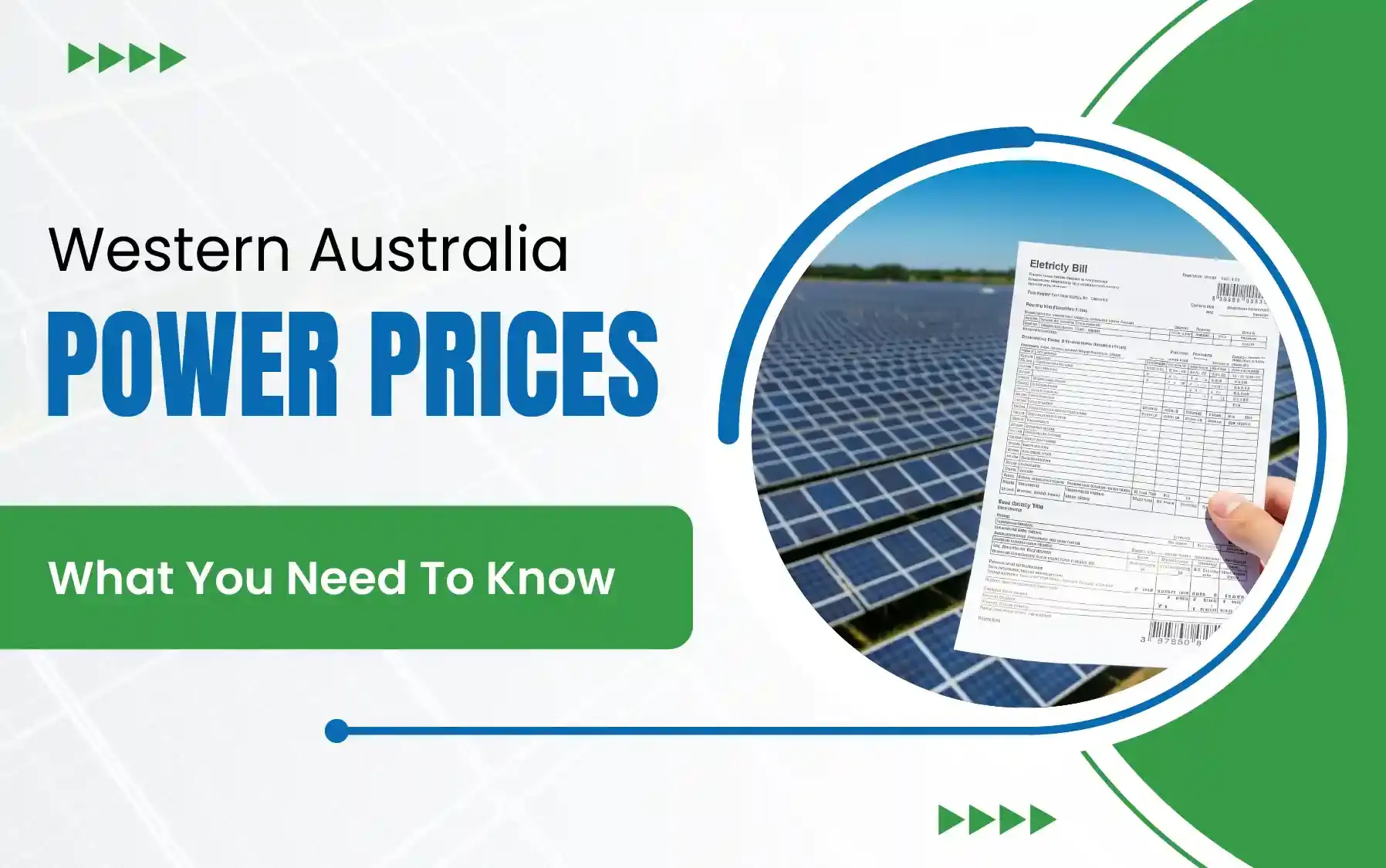
Ever opened your power bill and wondered why WA electricity prices seem to keep rising? You’re not alone. For households and businesses across the state, Western Australia power prices are a growing concern. As more Australians look to solar as a means of taking back control of their energy bills, it’s more important than ever to understand how electricity prices and power rates in Western Australia are determined. In this blog, we will take you through what’s really driving Western Australia’s power prices, how the Western Australian electricity market works, and where opportunities, including solar power , can help you plan better and save on your energy bills.
Overview: The WA Electricity Market
Western Australia has a unique electricity market that is not connected to the National Electricity Market (NEM) , which covers the entire eastern and southern Australia. But Western Australia has its own Wholesale Electricity Market (WEM), which provides for the entire demand in the South West Interconnected System (SWIS), including Perth and its environs. To understand how electricity reaches homes and businesses in WA, however, it’s important to look at the main network that powers the region:
South West Interconnected System (SWIS)
Below are the key features that shape power supply and pricing include:
- The SWIS serves the southwest corner of Western Australia, supplying electricity to homes and businesses across the region.
- It comprises coal, gas, wind, and solar stations, and increasingly storage facilities, all working to match demand in real time.
- As the SWIS operates in isolation from other electricity grids, WA has its own regulatory environment for electricity supply, demand, and prices.
This isolation affects both wholesale electricity prices and retail tariffs, which in turn determine what businesses and households pay.
How Western Australia Electricity Prices Are Set
So, what actually goes on behind the scenes to determine what you pay for electricity in Western Australia? Electricity prices in WA are determined through several interconnected mechanisms:
1. Regulated Retail Tariffs
Unlike other parts of the NEM, where a number of independent retailers compete with each other, the majority of residential customers in WA are still on regulated tariffs set by the state government (primarily Synergy and Horizon Power). These tariffs are a reflection of state government policies and are reviewed annually as part of the State Budget . Additionally, there has been a small increase in residential electricity tariffs.
2. Wholesale Electricity Market (WEM)
The WEM establishes the price that generators receive for electricity sold to retailers. It operates under specific rules and market procedures, with the Australian Energy Market Operator (AEMO) responsible for overseeing security and settlement.
Wholesale prices can vary depending on:
- Supply and demand conditions
- How much electricity do generators offer, and at what cost
- Availability of renewables like solar and wind
- Network constraints and outages
While household pricing is regulated, wholesale trends influence long-term cost pressure and infrastructure investment priorities.
Current Western Australia Power Prices
Western Australia’s electricity tariffs are influenced by regulated subsidies and wholesale markets. During the latest tariff cycles, the residential and small business electricity tariffs have moderately increased, with the residential tariffs increasing by 2.5% from 1st July 2023, following a review by the government. The latest tariff adjustments for 2025-26 are more or less in line with inflation due to a state subsidy that provides equal tariffs irrespective of the customer’s location.
Key Drivers of WA Electricity Prices
Let’s break down the main reasons why electricity prices in Western Australia are what they are.
1. Wholesale Electricity Costs
Wholesale electricity prices are the rates at which retailers purchase electricity from generators. This rate is a major contributor to the amount that appears on your
electricity bill
. Although Western Australia has its own market, certain factors such as increasing fuel costs, unexpected shortages, or higher generator prices may cause the wholesale electricity prices to rise. With time, the wholesale electricity prices may have an impact on the tariffs that households and small businesses pay.
2. Energy Sources and Changing Mix
In Western Australia, the sources of electricity are a combination of coal, gas, and other renewable sources such as solar and wind power. Gas is still a significant component of the energy mix, and the cost of gas can vary, particularly because of
global market trends
. The proportion of traditional energy sources and renewable energy sources is not only important for the current cost of electricity but also for future investment in the energy network. As more renewable energy sources are integrated into the energy network, the cost and reliability of electricity could change, which in turn will affect how much you pay for electricity in the future.
3. Network and Infrastructure Costs
Ever wondered how electricity reaches homes across such a huge state? The transmission of electricity over such a large geographical area as WA is not possible without a network of power transmission lines, substations, and maintenance infrastructure. These network costs are reflected in your electricity tariffs. The expansion of the network, peak demand management, and the incorporation of new technologies such as battery storage further increase these costs. Even the slightest variation in network tariffs and market regulations can affect your electricity tariffs, making infrastructure an important determinant of what you pay for electricity.
Rooftop Solar: Helping Lower Bills
Although rooftop solar does not determine prices, it can help lower them in the following ways:
- Lowering electricity costs for residential and commercial consumers
- Adding more renewable energy to the grid during daylight hours
- Relieving the grid during peak hours
The more the population turns to solar energy, the less they will rely on the grid, and this will shield them from high electricity costs.
How to Manage WA Power Prices
Here are some tips to help you take control of your electricity bill:
- Check Your Tariff Options – Find a tariff that suits your energy consumption, such as time-of-use tariffs.
- Consider Solar + Battery Storage – Produce your own electricity and cut your dependence on the grid.
- Keep Up with Market Changes – Stay updated about regulations, changes in power generation, and infrastructure developments.
Final Thoughts
Western Australia electricity prices are shaped by government rules, market mechanics, and energy sources. Knowing how prices work helps households and businesses make smarter energy choices, including using renewables like rooftop solar to save money.
Take control of your WA electricity bills with smart solar solutions today.